
Understanding planning · England
How to object to a planning application in England
A useful planning comment identifies a proposal and explains a specific concern or reason for support. Refer to the relevant drawing and give enough detail for the planning officer to assess your point.
Check application details and comment deadlines
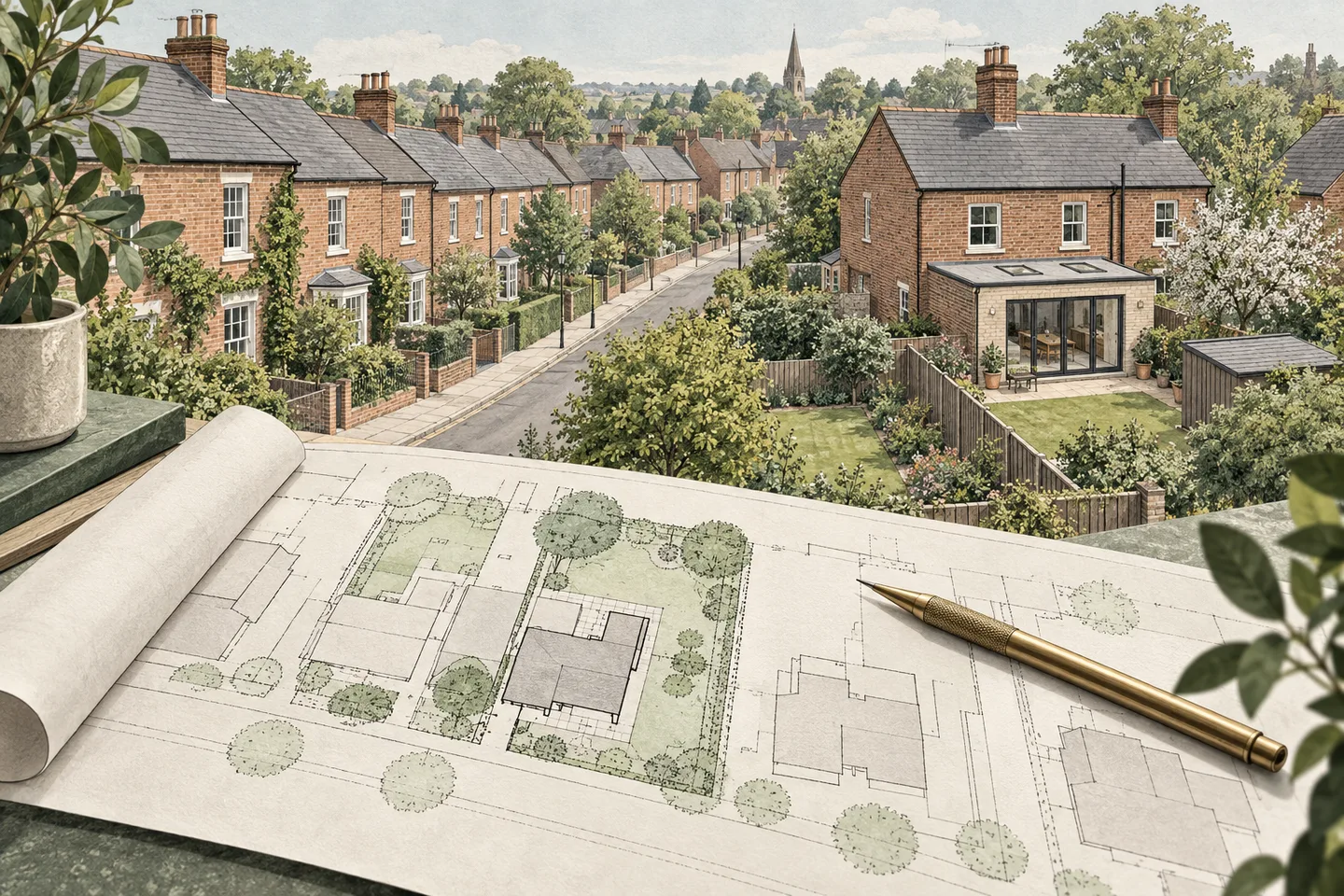
Find the application on the official council register and check its reference, plans and consultation deadline. Use the council’s submission instructions. Do not assume a date on an old neighbour letter still describes the current consultation.
Consultation arrangements vary by application type. The government explains the process in its consultation guidance. PlanningTrack helps you find the record; comments need to go to the authority.
Describe a planning effect the officer can assess
In England, decisions turn on the development plan and relevant material considerations. Effects on privacy, daylight, road safety or the character of an area can raise planning issues. The circumstances matter. A concern about your property’s price is not the same as a concern about an overlooking window.
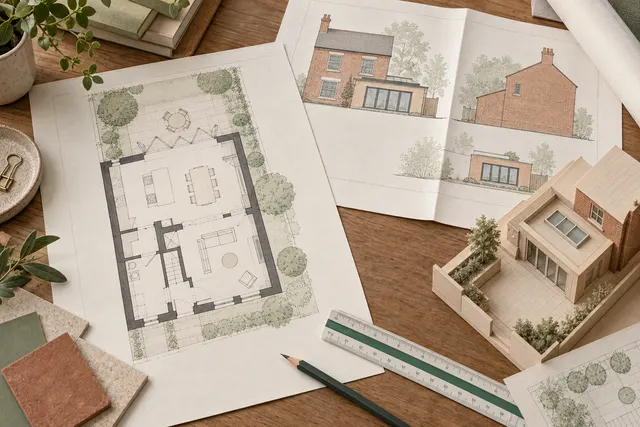
Choose your strongest points. For each one, identify the location, the proposed change and the effect. Refer to a drawing number where possible. The guide to reading drawings can help you find it.
Refer to specific drawings and features
For example: “On proposed first-floor plan P03 revision B, the side-facing bedroom window appears to face our kitchen window. Please assess the effect on privacy between these rooms.” This is an illustrative example, not a claim about a real application.
That gives the officer something to locate and assess. “This will ruin the street” leaves them guessing which part of the scheme you mean. If a change would address your concern, describe it without assuming that a particular condition or design solution will be appropriate.
The same approach works for support. Explain which feature you support and why, rather than treating the consultation as a vote.
Read it once more before submitting
Keep your comment about the proposal. Remove speculation about the applicant’s motives and unnecessary personal information. Read the council’s publication and privacy information before including contact details or photographs.
Save your text and the submission receipt. Return to the register if revised drawings appear, and check whether the authority is inviting further comments. Your original response may refer to a window or layout that has since changed.
Start with the authority directory if you still need to locate the council record. For a long document list, use our application reading order.
Collect evidence before writing a comment
Create three columns headed feature, evidence and concern. Under feature, name the actual part of the scheme: an access, window, roof form or proposed operating arrangement. Under evidence, identify a drawing, report or clearly described site observation. Under concern, explain the effect you want the council to assess. This simple exercise exposes weak points before they become confident claims.
Suppose you are concerned about vehicle access. A useful note might identify the proposed entrance on a numbered plan and describe the existing arrangement you have observed. It should not invent a traffic count or claim that a collision is certain. If technical evidence is needed, ask whether the relevant assessment addresses the specific point rather than presenting unsupported calculations as established fact.
For photographs, note where and when they were taken and what they show. A photograph can help explain a physical relationship, but perspective and lens choice can mislead. Avoid using a close-up that removes the context needed to understand the point. Check the council’s submission requirements and avoid including people, private details or unrelated material unnecessarily.
Keep proposed features separate from existing conditions. A complaint about something already happening on site may concern a different process from the application you are reading. Explain the distinction when contacting the authority. Otherwise a comment about current behaviour can be mistaken for evidence that the submitted scheme includes the same arrangement.
Reasons to object: relevant planning issues
You do not need to reproduce policy wording to explain a concern clearly. Name the effect, locate it and connect it to the proposal. For privacy, that may mean identifying which proposed opening faces which neighbouring space. For access, it may mean identifying where a manoeuvre appears to take place. The officer needs a point that can be checked, not a collection of emphatic adjectives.
If you refer to a local policy, find the current official document and read the relevant passage in context. Do not rely on a policy number copied from an old objection or another council’s website. Policies can have conditions, definitions and supporting explanation that matter to the application. A citation is useful only when it actually supports the point you are making.
Keep matters of personal preference separate from effects the planning process can assess. Government guidance explains the concept of material considerations, but the relevance and weight of an issue depend on the case. Where you are uncertain, describe the factual situation and ask for it to be assessed rather than claiming that the authority is legally required to reach your preferred outcome.
Avoid suggesting that one neighbouring approval automatically decides this application. Similar cases can provide context, but differences in site, design, policy or evidence may matter. If you cite another decision, supply its reference and explain the specific comparison. Do not simply list nearby developments and assume that their outcomes settle the question.
- FeatureName the part of the current proposal.
- EvidenceIdentify a drawing, report or clear site observation.
- EffectExplain the concern without unsupported certainty.
- RequestAsk the authority to assess the specific point.
This structure helps organise a comment; it does not establish that a concern is material or determine the outcome. Use the council’s instructions for the particular application. Check drawings and deadlines before submitting, and adapt the content to the actual site rather than copying an example unchanged.
A clear structure for a planning objection or supporting comment
Start with the application reference, site address and a short statement of your position. Say whether you object, support or wish to comment on particular details. If your position is qualified, make that clear. For example, you might support the principle of an alteration while asking the council to assess a particular opening or access arrangement.
Use a separate paragraph for each substantive point. Give the drawing or document reference, describe what it shows and explain the effect you are concerned about. Keep the paragraphs in order of importance. This helps the reader identify your main argument without having to extract it from a long account of how you first heard about the application.
Where appropriate, identify a change you would like considered. Phrase it as a request for assessment rather than a guaranteed remedy. A design alteration or condition may have consequences you cannot see from the public file. The point is to explain what would address your concern, while leaving the authority to assess whether that response is appropriate and achievable.
Finish with a short request connected to your points. You might ask the officer to assess the relationship shown on a particular plan or clarify which revision is current. Include information the council requires for submission, following its privacy instructions. Keep a copy of exactly what you send, including attachments and the submission confirmation.
Worked example: an objection focused on one drawing
The following is a fictional example about a proposed first-floor side window. It is not a template to submit unchanged. A sensible opening would identify the reference and say: “I object to the side-window arrangement shown on the current proposed first-floor plan because of its relationship with the neighbouring kitchen window.” That makes the subject clear without overstating the conclusion.
The next paragraph could identify the drawing number and revision, describe the position of both openings and ask the officer to assess the effect on privacy. If you have a useful photograph, explain its viewpoint and what it demonstrates. Do not add a precise separation distance unless you have a reliable basis for it and make that basis clear.
A final paragraph might ask whether an alternative arrangement should be considered. Avoid promising that a particular glazing specification or window design will resolve the issue; that requires assessment of the actual proposal. Your contribution is to identify the relationship and explain the concern in a form the officer can investigate.
Now compare that with a weak version: “This is overdevelopment, nobody wants it and it will destroy house prices.” The weak version supplies no drawing reference, combines broad assertions and leaves the physical issue unclear. Replacing it with a specific account does not guarantee the application will be refused. It improves the usefulness and accuracy of the comment.
If the window has already been removed on an amended plan, revise your response before sending it. Keeping an objection to a feature that no longer exists wastes the reader’s time and can obscure any remaining issue. The drawing guide explains how to identify revisions and compare the same view across versions.
Responding when plans change
Applications can acquire revised documents during consideration. When you notice an amendment, first establish which drawings changed and which remain relevant. Read any accompanying explanation and check the council’s current consultation instructions. Do not assume that every upload starts a new comment period or that an earlier deadline still applies without checking the record.
Compare the revision with the specific concerns in your original response. A change may resolve one point, leave another unchanged and introduce something you had not previously considered. If you send a further comment, explain that sequence. “My earlier point about the side opening is addressed by revision C, but the access question remains” is easier to follow than resending the original letter.
Keep earlier comments and receipts in your own file. In the new response, refer to your previous submission by date and application reference. This helps the authority connect the documents, but do not assume that an email about a different application has been transferred automatically. Distinct references should be treated as distinct cases unless the council tells you otherwise.
If time is short, concentrate on the material change. You do not need to rewrite the entire history of the proposal each time a revised plan appears. Identify the new document, the affected feature and your updated observation. For a complex scheme, consider getting appropriate advice about the change rather than rushing into technical claims you cannot support.
Writing with neighbours without losing specific evidence
A group can make research more manageable by sharing tasks. One person can track documents, another can locate the relevant policy and another can organise questions. Agree which application and drawing revisions you are discussing before combining findings. Otherwise a shared letter can accidentally mix comments about different versions of the scheme.
Separate shared concerns from effects specific to individual properties. A window relationship affecting one home may not apply to every signatory. Describe whose observation is being reported without publishing unnecessary personal information. Read the council’s arrangements for group representations and decide who will receive correspondence, if that is part of the submission process.
Check every factual statement before asking people to support it. A widely circulated claim can become difficult to correct once screenshots and copied text spread. Keep links to the documents behind the group’s points and record any uncertainties. Agreement among neighbours is not a substitute for evidence, even when everyone has a sincere concern.
Avoid promising that a certain number of objections will determine the outcome. The purpose of commenting is to bring relevant information and arguments to the decision-maker. Focus the group’s effort on accuracy and clarity rather than producing a target number of near-identical paragraphs. This also makes it easier to recognise when a design change addresses a concern.
What to check after you have submitted
Save the acknowledgement and check any instructions it contains. A receipt confirms submission; it does not necessarily mean the authority agrees with your points. If you cannot find your comment on the public page immediately, read the council’s publication information before assuming it was lost. Contact the authority with the reference and receipt if you need to clarify receipt or processing.
Later, read the published report and decision notice if available. Look for how the issue was assessed, including any relevant condition or revision. The wording may not repeat your comment exactly. Read the reasoning around the subject before concluding that it was ignored simply because a particular phrase does not appear.
Keep a record of the outcome with your original response. If you are concerned about what a decision means or what options remain, seek current guidance appropriate to your position. Applicant appeal routes and questions raised by third parties are not interchangeable. Do not assume that a generic online appeal form is available to everyone who disagrees with a decision.
For ongoing research, return to the official record through the authority directory. Check related applications separately and avoid treating an old objection as a standing response to every future proposal on the site. Each new case needs its own reference, current documents and an assessment of what is actually being proposed.
- Identify the current application, drawing revision and submission deadline.
- Explain each concern using a feature, evidence and effect.
- Remove speculation, unsupported measurements and unnecessary personal details.
- Save the submitted wording and receipt, then read subsequent revisions and decisions.
Should I use a planning objection letter template?
A template is useful for remembering a reference, organising points and checking that a submission is readable. It cannot tell you which objections apply to your site. Before retaining a paragraph, identify the current drawing or evidence that supports it. Remove claims about measurements, local policies or effects that you have not checked. A template containing another council’s policy number or a superseded drawing can make an otherwise sensible response confusing.
Use your own description of what you observed and what you want assessed. If you are supporting only part of a proposal, say so plainly rather than forcing your view into a template that assumes total opposition. Keep the final wording with your submission receipt. When plans change, work from that saved version and identify the points affected by the revision. This is more useful than generating another long letter that repeats the same concerns without checking whether the design still contains them.
Sources & scope
The procedural guidance in this article applies to England. Scotland, Wales and Northern Ireland have their own planning systems. For a decision about your own project, check the current official guidance and the council record.
Support comments and objections with evidence
People often search for an objection letter because they are worried about a nearby proposal. That is understandable, but start by reading the current application before deciding what your response should say. You may oppose one feature, support another or need clarification before taking a position. A useful comment describes the proposal and its effects with enough precision for the officer to assess it.
The same discipline applies to support. Explain which part of the design or proposed use you support and why it is relevant to the site. A statement that you like the applicant is less useful than a clear observation about the proposal. Likewise, criticism of an applicant’s motives does not help an officer locate or assess a disputed feature on a drawing.
Do not treat a template as a substitute for reading the file. Templates can help organise a response, but repeated wording may describe a different building, orientation or application type. If you cannot point to evidence for a sentence, remove it or turn it into a question. A shorter accurate comment is more useful than a long list of possible objections copied from elsewhere.
This guide addresses commenting on English planning applications. Check the council’s own instructions for the case, including whether comments are being invited, the submission route and publication arrangements. If you are researching elsewhere in the UK, use the relevant authority’s guidance. A familiar register interface does not mean that all procedures or deadlines are identical.