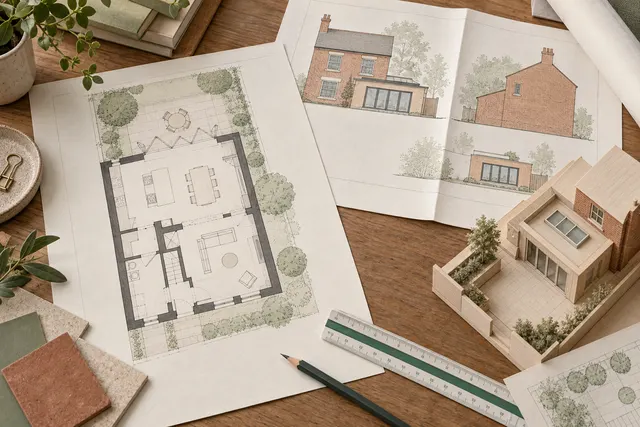
Understanding planning · 13 min read
Planning application documents: what to read first
Understand planning application documents, officer reports and decision notices. Use a reading checklist, document table and worked example to inspect a case.
 PlanningTrack
Council planning record
Tech Foundry 1a Curie Avenue Harwell Oxford Didcot OX11 0QQ
Last published check: 16 Oct 2026, 03:25. Check the council record for more recent changes.
Council milestones and published deadlines. A deadline passing does not confirm a decision.
Display of two non-illuminated ‘Alloyed’ logo signs comprising individual matte black powder-coated stainless steel lettering, mounted to the east and west façades of the existing commercial building. Each sign measures 4800mm wide x 1468mm high with 40mm returns.
Sign in to view all collected council fields and recorded changes.
Sign in to view collected detailsTech Foundry 1a Curie Avenue Harwell Oxford Didcot OX11 0QQ
This record has no verified map location.
| Document | Published | Action |
|---|---|---|
| Applicationformredacted(1)Application Form | Not published | View |
| Site PlanPlan | Not published | View |
| Location PlanPlan | Not published | View |
| Detail DrawingSupporting Document | Not published | View |
| Photographs and photomontagesSupporting Document | Not published | View |
| Signage DetailSupporting Document | Not published | View |
Documents open on the council website. Browse council documents if a link has changed.
Conditions aren’t listed here. Read the council decision notice for the full decision and conditions.
Understanding planning · 13 min read
Understand planning application documents, officer reports and decision notices. Use a reading checklist, document table and worked example to inspect a case.
Understanding planning · 13 min read
Understand pending consideration, approved, refused and withdrawn planning applications. Compare status labels and find the documents explaining each outcome.
Understanding planning · 13 min read
Read planning drawings, floor plans, elevations and sections. Use labelled diagrams, a drawing comparison table and revision checks to understand a proposal.