CONDITION 1: The development to which this permission relates must not be begun later than the expiration of three years from the date of this permission. REASON: To comply with Section 91 of the Town & Country Planning Act 1990 as amended by Section 51 of the Planning and Compulsory Purchase Act, 2004.
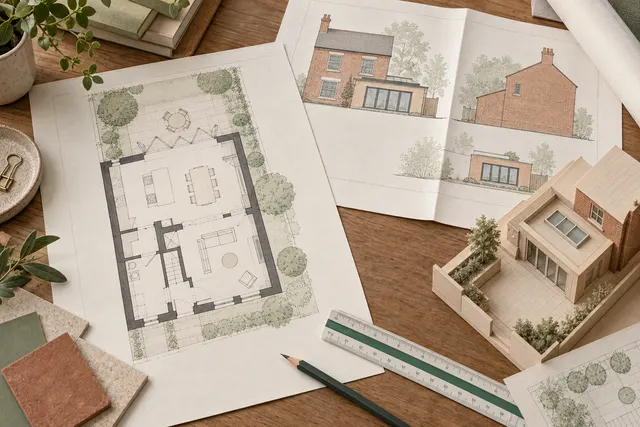
CONDITION 2: The development shall be carried out in accordance with the plans and documents detailed below: Proposed Elevations Option 2 - 2165-105 Received by the Local Planning Authority on the 19th January 2026 Site Location Plan & Block Plan - 2165-100 Received by the Local Planning Authority on the 20th January 2026 Proposed Plans - 2165-102A Received by the Local Planning Authority on the 9th February 2026 REASON: For the avoidance of doubt and to ensure that the details of the development are acceptable to the Local Planning Authority.
CONDITION 3: No development shall be occupied until a scheme for the provision of minimum one bat box/roosting feature to be erected within the site, has been submitted and approved by the Local Planning Authority. The scheme must include box type, location, and timing of works. Thereafter, the box/feature shall be installed and maintained in perpetuity. REASON: To enhance the biodiversity of the site in accordance with Local Plan Policies NE1, NPPF, ODPM Circular 2005/06 and NERC Act (2006, as amended).
INFORMATIVE 1: Bats can be found in many buildings, even those that initially appear to be unsuitable or have been subject to a bat survey and found no evidence. Therefore, if any evidence of bats is found on site, work should stop while a bat survey is carried out by an experienced bat worker, and any recommendations made following the survey are undertaken. It should also be noted that as bats are a mobile species and can move into a property with potential access at any time. A further survey may be required if the works are not undertaken within two years. Bats and roosts are protected under the 1981 Wildlife and Countryside Act, the Countryside and Rights of Way Act 2000, and The Conservation of Habitat and Species Regulations 2017 (as amended).
INFORMATIVE 2: Work should avoid disturbance to nesting birds. Birds can nest in many places including buildings, trees, shrubs, dense ivy, and bramble/rose scrub. Nesting birds are protected under the Wildlife and Countryside Act 1981 (as amended). The main nesting season lasts approximately from March to September inclusive, so work should ideally take place outside these dates if at all possible. N.B birds can nest at any time, and the site should ideally be checked by a suitably qualified ecologist for their presence immediately before work starts, especially if during the breeding season.
Understand planning application documents, officer reports and decision notices. Use a reading checklist, document table and worked example to inspect a case.
Understand pending consideration, approved, refused and withdrawn planning applications. Compare status labels and find the documents explaining each outcome.
Read planning drawings, floor plans, elevations and sections. Use labelled diagrams, a drawing comparison table and revision checks to understand a proposal.
 PlanningTrack