The development shall begin no later than five years from the date of this decision. Reason: To comply with the requirements of Section 91 of the Town & Country Planning Act 1990 (as amended).
The development shall be carried out in accordance with the following approved plans and documents: Site Location Plan PE-01-L37 Rev01; and PE-01-L20., Covering letter, Planning Supporting Statement (including Cable Construction Method Statement), Ecology site walkover – technical note 12 August 2025 and Cable section. Reason: In the interests of amenity and to comply with the requirements of policy GN1 of the Local Development for Pembrokeshire (Adopted 28th February 2013).
Prior to the commencement of development, a Construction Environment Management Plan (CEMP) shall be submitted to, and approved in writing by, the Local Planning Authority. This shall include full details of a pre-commencement site walkover by an Ecological Clerk of Works to check for the presence of otters. All works shall be undertaken in accordance with the approved CEMP. Reason: In the interests of protecting amenity, landscaping and ecological interests; to accord with policies GN.1 and GN.37 of the Local Development Plan for Pembrokeshire (adopted 28th February 2013).
Prior to the commencement of development associated with the cable route, a scheme for removal and protection of landscaping during construction and the post-construction re-instatement of landscaping, shall be submitted to, and approved in writing by, the local planning authority. The scheme shall be implemented as approved. Reason: To protect the character and appearance of the area and in the interests of biodiversity; to accord with policies GN.1, GN.2 and GN.3 of the Local Development Plan for Pembrokeshire (adopted 28 February 2013).
Prior to the commencement of development associated with the cable route, a qualified and competent archaeologist shall submit a written scheme of investigation (WSI) for approval in writing by the local planning authority. The WSI shall describe the different stages of the work and demonstrate that it has been fully resourced and given adequate time. This work shall not be deemed complete until all aspects of the WSI have been addressed and the final report submitted to, and approved by, the local planning authority. Reason: To ensure archaeological matters are appropriately addressed; to accord with Policy GN.38 of the Local Development Plan for Pembrokeshire (adopted 28 February 2013). Pre-commencement requirement approved by reason of Discharge of Condition consent ref. 26/0135/DC.
Within 6 months of the expiry of planning permission 24/0133/PA, the cable shall be removed from the site and the land restored to its former condition in accordance with a decommissioning scheme that must first be submitted to and approved in writing by the Local Planning Authority before the expiry of the 40-year period. The cable shall be removed and the site restored to agricultural use within 12 months of any scheme submitted to and approved by the Local Planning Authority in pursuance of condition 12 of planning permission 24/0133/PA. Reason: In order to be clear on the de-commissioning and site restoration scheme in the interests of protecting amenity and ecological interests; to accord with policies GN.1 and GN.37 of the Local Development Plan for Pembrokeshire (adopted 28th February 2013).
The site is within the catchment for nutrient sensitive Pembrokeshire Marine Special Area of Conservation (SAC) requiring nitrogen neutrality. The application has been screened in accordance with Natural Resources Wales’ interim advice to Chief Planners dated 25th July 2025.It is considered that this development is unlikely to have a likely significant effect on the Marine SAC as the following criterion applies: No. 1 Any development that does not increase the volume or concentration of wastewater.
This document comprises Version 2 of this decision, amended as follows: -By reason of Discharge of condition consent ref. 26/0135/DC approved on 10/06/2026.
Understand planning application documents, officer reports and decision notices. Use a reading checklist, document table and worked example to inspect a case.
Understand pending consideration, approved, refused and withdrawn planning applications. Compare status labels and find the documents explaining each outcome.
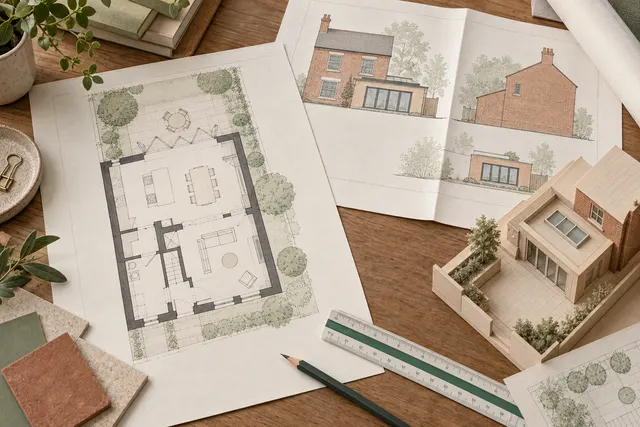
Read planning drawings, floor plans, elevations and sections. Use labelled diagrams, a drawing comparison table and revision checks to understand a proposal.
 PlanningTrack