The development shall begin not later than five years from the date of this decision. Reason: Required to be imposed pursuant to Section 91 (1) of the Town and Country Planning Act 1990 (as amended).
The development shall be carried out in accordance with the following approved plans and documents: • Drawing ref: 831-01 – Location Plan, received 26th November 2025 • Drawing ref: 831-03 – Proposed Ground floor Plan and Section, received 26th November 2025 • Drawing ref: 831-04 – Proposed Elevations, received 26th November 2025 • Drawing ref: 831-05 – Site Layout Plans, received 26th November 2025 • Green Infrastructure Statement received 26th November 2025 Reason: In order to be clear on the approved scheme of development in the interests of protecting visual amenity and the special qualities of the National Park. Policy: Local Development Plan 2 – Policies 1 (National Park Purposes and Duty), 8 (Special Qualities), 14 (Conservation of the Pembrokeshire Coast National Park) and 29 (Sustainable Design).
In the first available planting seasons following approval, planting must be implemented according to the Green Infrastructure Statement and Site Layout Plans; drawing ref 831-05. Any existing plants retained or translocated; or new plants planted in accordance with the approved scheme which, within a period of 5 years after implementation of the approved development are removed, die, become diseased or damaged to such extent that, in the opinion of the Local Planning Authority, the function in relation to this planning approval is no longer delivered, shall be replaced with plants of similar size and specification. The new trees and wildflowers must be native species included within the Authority’s native trees and shrubs list: 23 June 2000, and native wildflowers list Grass Seed Mix Any variations to the details of the documents and plans must only be undertaken after the proposed variations have been agreed in writing by the LPA. Reason: To prevent detrimental impact to trees, hedges and other landscape features which contribute to the amenity, landscape & biodiversity of the site and surrounding area. Local Development Plan 2 – Policies: 1 (National Park Purposes and Duty), 8 (Special Qualities), 14 (Conservation and enhancement of the Pembrokeshire Coast National Park), 30 (Amenity), SPG 12 – Biodiversity, Technical Advice Note (TAN) 5: Nature Conservation and Planning (2009), Technical Advice Note (TAN) 10: Tree Preservation Orders (1997).
Prior to the occupation or commencement of permitted use of the development hereby approved, the bird box must be installed according to the Green Infrastructure Statement and Drawing Ref 831-04). If the bird box, within a period of 5 years after implementation of the approved development, is removed, damaged or becomes otherwise defective, to such an extent that, in the opinion of the Local Planning Authority, the function in relation to this planning approval is no longer delivered, shall be replaced with boxes of similar size and specification. Reason: To ensure that animal and plant species and habitats are listed under the Conservation of Habitats and Species Regulations 2017 are adequately protected, and to protect and enhance the character and appearance of the site and its setting within the Pembrokeshire Coast National Park. Local Development Plan 2 - Policies: 1 (National Park Purposes and Duty), 8 (Special Qualities), 10 (Sites and Species of European Importance) and 14 (Conservation and enhancement of the Pembrokeshire Coast National Park), 30 (Amenity), SPG 12 - Biodiversity, Technical Advice Note (TAN) 5: Nature Conservation and Planning (2009) and Section 6 of Planning Policy Wales Edition 12.
Prior to the erection of any additional external lighting on the approved site a light mitigation strategy, including measures to reduce light spillage onto foraging habitats for bats shall be submitted to and approved in writing by the local planning authority. The development shall be carried out in accordance with the approved details. Reason: To ensure that animal and plant species and habitats listed under the Conservation of Habitats and Species Regulations 2010 are adequately protected, and to protect and enhance the character and appearance of the site and its setting within the Pembrokeshire Coast National Park. Policy: Local Development Plan 2 - Policies 1 (National Park Purposes and Duty), 8 (Special Qualities), 12 (Local Areas of Nature Conservation or Sites of Geological Interest) and 14 (Conservation of the Pembrokeshire Coast National Park).
All retained trees, hedgebanks and hedge boundary features and/or any trees whose canopies overhang the site shall be protected by the duration of the development (in accordance with BS5837: 2012 ‘Trees in relation to design, demolition, and construction – Recommendations’). The type and position to be agreed with this authority prior to commencement. The protection measures shall be implemented prior to any equipment, machinery or materials are brought onto the site for the purposes of the development, and shall be maintained until all equipment, machinery and surplus materials have been removed from the site. Nothing shall be stored or placed within any protection area, and the ground levels within those areas shall not be altered, nor shall any excavation (in relation to connecting to existing infrastructure) be made, without the prior written consent of the local planning authority. No works to trees will be carried out without prior approval from this authority. Reason: To prevent detrimental impact to trees, hedges and other landscape features which contribute to the amenity, landscape & biodiversity of the site and surrounding area. Local Development Plan 2 – Policies: 1 (National Park Purposes and Duty), 8 (Special Qualities), 14 (Conservation and enhancement of the Pembrokeshire Coast National Park), 30 (Amenity), SPG 12 – Biodiversity, Technical Advice Note (TAN) 5: Nature Conservation and Planning (2009), Technical Advice Note (TAN) 10: Tree Preservation Orders (1997).
INFORMATIVE: PROTECTED SPECIES All British bat species are European Protected Species by virtue of their listing under Annex IV of EC Directive 92/43/EEC (‘The Habitats Directive’). This Directive has been transposed into British Law under the Conservation of Habitats and Species Regulations 2017. British bats are also protected under Schedule 5 of the Wildlife and Countryside Act 4 of 5 (1981) (as amended). It is recommended that the applicant and contractors be informed of the possibility of encountering bats unexpectedly during works. If bats are encountered on site works should stop immediately an NRW should be contacted (Natural Resources Wales, - General Enquiries: enquiries@naturalresourceswales.gov.uk or 0300 065 3000 Mon-Fri, 8am - 6pm) a licence may then need to be applied for from NRW. Licences are not automatically granted by virtue of a valid planning consent and it may be possible that the necessary licence application may be refused.
Understand planning application documents, officer reports and decision notices. Use a reading checklist, document table and worked example to inspect a case.
Understand pending consideration, approved, refused and withdrawn planning applications. Compare status labels and find the documents explaining each outcome.
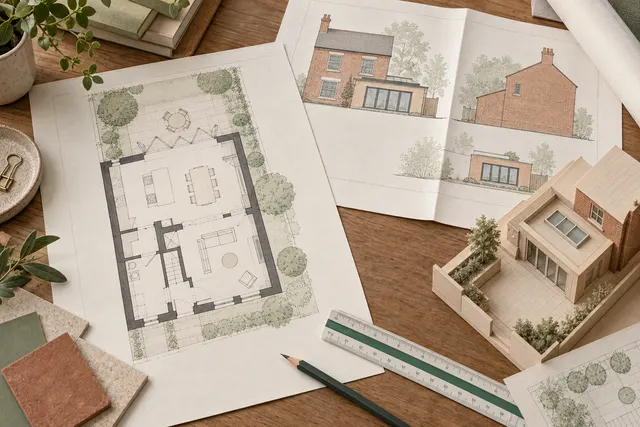
Read planning drawings, floor plans, elevations and sections. Use labelled diagrams, a drawing comparison table and revision checks to understand a proposal.
 PlanningTrack