Understanding planning · 13 min read
Planning application documents: what to read first
Understand planning application documents, officer reports and decision notices. Use a reading checklist, document table and worked example to inspect a case.
 PlanningTrack
Status on council recordCouncil status: Decided
Address not published
Last published check: 21 Nov 2026, 01:14. Check the council record for more recent changes.
Last published check: 21 Nov 2026, 01:14 (UK)
Dates come from the council record. A target date passing does not confirm a decision.
A published target or deadline. It does not confirm an outcome.
Council sourceT1 Weeping beech in front garden: Raise low branches over garden, lawn, drive and public footpath to give a 3m to 3.5m clearance, reduce back branches that are growing towards the house to maintain a gap of appox 4m, reduce back branches from the highway to maintain a ground clearance of 5.5m, reduce back branches to clear neighbour's tree and tip-reduce the branches over neighbour's drive; T2 Pollarded lime: Notable decay at the top near the attachment point of the branches, selectively remove the large poles leaving short stubs to promote re-growth: T3 holly located to the rear of the house: Reduce the upper, sparse crown forming a neat dome profile 7m to 5m.
Sign in to view all collected council fields and recorded changes.
Sign in to view collected detailsDocuments open on the council website. Browse council documents if a link has changed.
Conditions aren’t listed here. Read the council decision notice for the full decision and conditions.
Understanding planning · 13 min read
Understand planning application documents, officer reports and decision notices. Use a reading checklist, document table and worked example to inspect a case.
Understanding planning · 13 min read
Understand pending consideration, approved, refused and withdrawn planning applications. Compare status labels and find the documents explaining each outcome.
Understanding planning · 13 min read
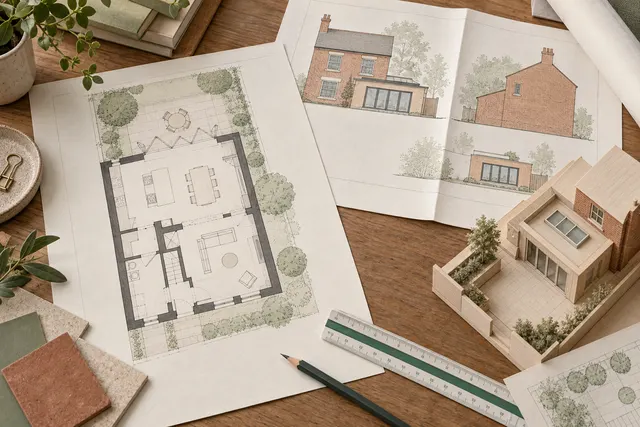
Read planning drawings, floor plans, elevations and sections. Use labelled diagrams, a drawing comparison table and revision checks to understand a proposal.