In the case of any reserved matters, application for approval must be made not later than the expiration of three years beginning with the date on which this permission is granted ; and The development to which this permission relates must be begun not later than the expiration of two years from the final approval of the reserved matters or, in the case of approval on different dates, the final approval of the last such matters to be approved. Reason To comply with the requirements of Section 92 of the Town & Country Planning Act 1990.
No part of the development hereby permitted shall be commenced until approval of the details of, appearance, landscaping, and scale ('the reserved matters') has been obtained from the Local Planning Authority. Reason The permission is in principle only and does not authorise development to commence until all 'the reserved matters' have been approved. To ensure compliance with the requirements of Section 92 of the Town & Country Planning Act 1990.
This permission relates to the following plans: [insert plan numbers] Reason For the avoidance of doubt and in the interests of proper planning.
No part of the development hereby approved shall be undertaken above ground level until details of the materials to be used for the external surfaces have been submitted to and approved by the Local Planning Authority. Reason In the interests of visual amenity and to ensure compliance with Local Plan Policies CP3, CP15, CP16, RTC3 (where applicable) and the NPPF.
No plant or machinery shall be operated, no loading or unloading of vehicles and no movement of commercial vehicles to or from the site shall take place outside the hours of 08:00hrs to 18:00hrs Monday to Friday and 08:00hrs to 13:00hrs on Saturdays. None of the above operations shall be carried out at any time on Sundays or Bank and Public Holidays. Reason To ensure that the proposed development does not prejudice the enjoyment by neighbouring occupiers of their properties and to ensure compliance with the Local Plan Policies CP3 - Chase Shaping, CP8 - Employment Land and the NPPF.
Cadent Gas Ltd own and operate the gas infrastructure within the area of your development. There may be a legal interest (easements and other rights) in the land that restrict activity in proximity to Cadent assets in private land. The applicant must ensure that the proposed works do not infringe on legal rights of access and or restrictive covenants that exist. If buildings or structures are proposed directly above the apparatus the development may only take place following diversion of the apparatus. The applicant should apply online to have apparatus diverted in advance of any works, by visiting cadentgas.com/diversions Prior to carrying out works, including the construction of access points, please register on www.linesearchbeforeudig.co.uk to submit details of the planned works for review, ensuring requirements are adhered to.
Mining Remediation Authority The proposed development lies within a coal mining area which may contain unrecorded coal mining related hazards. If any coal mining feature is encountered during development, this should be reported immediately to the Mining Remediation Authority on 0345 762 6846 or if a hazard is encountered on site call the emergency line 0800 288 4242. Further information is also available on the Mining Remediation Authority website at: https://www.gov.uk/government/organisations/mining-remediation-authority
Staffordshire Police Whilst Staffordshire Police have no objections to the proposal, they have provided further guidance regarding safety and Secured by Design Standards. The applicant is advised to view this guidance, which is available at: Citizen Portal Planning.
Understand planning application documents, officer reports and decision notices. Use a reading checklist, document table and worked example to inspect a case.
Understand pending consideration, approved, refused and withdrawn planning applications. Compare status labels and find the documents explaining each outcome.
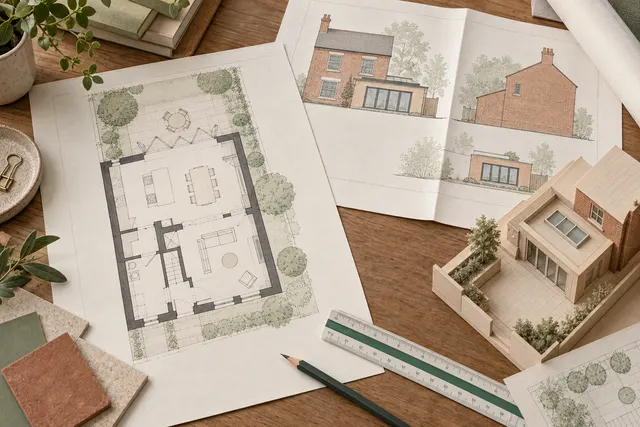
Read planning drawings, floor plans, elevations and sections. Use labelled diagrams, a drawing comparison table and revision checks to understand a proposal.
 PlanningTrack