The development to which this permission relates must be completed in accordance with the approved plans: 3066-01 Location Plan, Site Plan, Proposed Plan, Existing Plan Reason To comply with the requirements of Section 91 of the Town & Country Planning Act 1990.
The building to which this permission relates to shall only be used as ancillary to the main house. The building shall not be used at any time for commercial or residential lettings and shall not be sold or leased separately from the main house. Reason The application has been determined on the basis that the building will be used as ancillary accommodation to 12 Florence Street, Hednesford and its use as an independent dwelling or other use has not been fully assessed.
The materials to be used for the external surfaces of the development shall be of the same type, colour and texture as those used on the existing building. Reason In the interests of visual amenity and to ensure compliance with Local Plan Policies CP3, CP15, CP16, RTC3 (where applicable) and the NPPF.
The proposed development lies within a coal mining area which may contain unrecorded coal mining related hazards. If any coal mining feature is encountered during development, this should be reported immediately to the Coal Authority on 0345 762 6848. Further information is also available on the Coal Authority website at: www.gov.uk/government/organisations/the-coal-authority
Biodiversity Net Gain The effect of paragraph 13 of Schedule 7A to the Town and Country Planning Act 1990 is that, subject to some exemptions, every grant of planning permission in England is deemed to have been granted subject to the biodiversity gain condition that development may not begin unless: (a) a Biodiversity Gain Plan has been submitted to the planning authority, and (b) the planning authority has approved the plan. This objective is for development to deliver at least a 10% increase in biodiversity value relative to the pre-development biodiversity value of the onsite habitat. This increase can be achieved through onsite biodiversity gains, registered offsite biodiversity gains or statutory biodiversity credits. There are statutory exemptions and transitional arrangements which mean that the biodiversity gain condition does not always apply. These can be found at Biodiversity net gain: exempt developments - GOV.UK (www.gov.uk). On the basis of the information provided to determine the application, it is not possible for Cannock Chase Council to indicate at the time of granting planning permission whether the approval of a Biodiversity Gain Plan will be required before development commences. Before commencing development, you should consider whether a Biodiversity Gain Plan needs to be submitted and approved. Commencing development which is subject to the biodiversity gain condition without an approved Biodiversity Gain Plan could result in enforcement action for breach of planning control. The planning authority, for the purposes of determining whether to approve a Biodiversity Gain Plan in respect of this permission is Cannock Chase Council. When submitting an application to discharge the biodiversity gain condition the LPA requests that the applicant uses the standard national templates for a Biodiversity Gain Plan and a Habitat Management and Monitoring Plan. Submit a biodiversity gain plan - GOV.UK (www.gov.uk) The Biodiversity Gain Plan should be submitted as an ‘application for approval of details reserved by condition following grant of planning permission’ via the Planning Portal. The biodiversity gain condition cannot be removed or varied.
Understand planning application documents, officer reports and decision notices. Use a reading checklist, document table and worked example to inspect a case.
Understand pending consideration, approved, refused and withdrawn planning applications. Compare status labels and find the documents explaining each outcome.
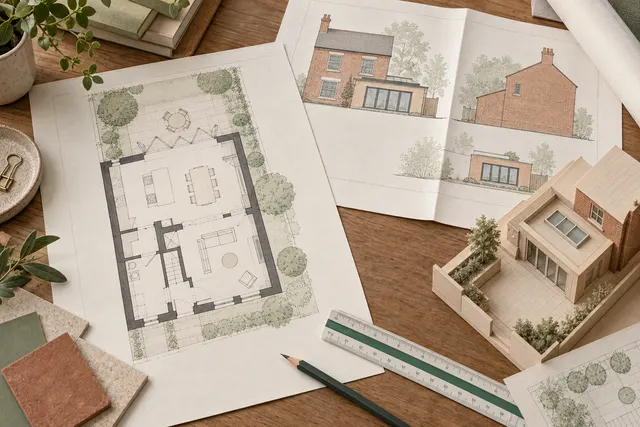
Read planning drawings, floor plans, elevations and sections. Use labelled diagrams, a drawing comparison table and revision checks to understand a proposal.
 PlanningTrack