The works herby permitted shall be begun before the expiration of the five years from the date of this consent. Reason: as required by Section 98 of the Historic Environment (Wales) Act 2023.
The works hereby permitted shall be carried out, and thereafter retained, strictly in accordance with the deposited plans and documents: - • M/01 - Location Plan - received 31/07/26 • M/02/A - Existing Site Plan - received 19/08/26 • M/03/A - Proposed Site Plan - received 19/08/26 • Heritage Impact Statement - received 31/07/26 Reason: As required by Section 90(2) of the Historic Environment (Wales) Act 2023. To ensure the development is carried out in accordance with the approved drawings, for the avoidance of doubt.
In the first available planting and seeding seasons following the first use, or substantial completion, of the development, planting must be implemented according to drawing M/3/A. Any existing plants retained or translocated; or new plants planted or seeded in accordance with the approved scheme which, within a period of 5 years after implementation of the approved development are removed, die, become diseased or damaged to such extent that, in the opinion of the Local Planning Authority, the function in relation to this planning approval is no longer delivered, shall be replaced with plants of similar size and specification. Reason: To ensure that animal and plant species and habitats are adequately protected, and to protect and enhance the character and appearance of the site and its setting within the Pembrokeshire Coast National Park and to accord with policy: Local Development Plan 2 – Policies 1 (National Park Purposes and Duty), 8 (Special Qualities), 10 (sites and species of European importance), 11 (Nationally protected sites and species) and 14 (Conservation of the Pembrokeshire Coast National Park). Section 6 of PPW edition 1.2.
Natural Resources Wales Advisory All works at the site must be carried out in accordance with GPP5, ‘Works and maintenance in or near water’ and GPP6 ‘Working at construction and demolition sites’ which are available on the following website: gpp-5-works and-maintenance-in-or-near-water.pdf (netregs.org.uk) and gpp6-working-on construction-and-demolition-sites.pdf (netregs.org.uk). It is recommended that the applicant be informed that amphibians are protected under the Wildlife and Countryside Act 1981 (as amended). The common toad, natterjack today, common frog, great crested newt, palmate newt and smooth newt, all receive protection under the Wildlife and Countryside Act from killing and injury. Care should therefore be taken during site clearance and construction to ensure that no amphibians are killed or injured.
Understand planning application documents, officer reports and decision notices. Use a reading checklist, document table and worked example to inspect a case.
Understand pending consideration, approved, refused and withdrawn planning applications. Compare status labels and find the documents explaining each outcome.
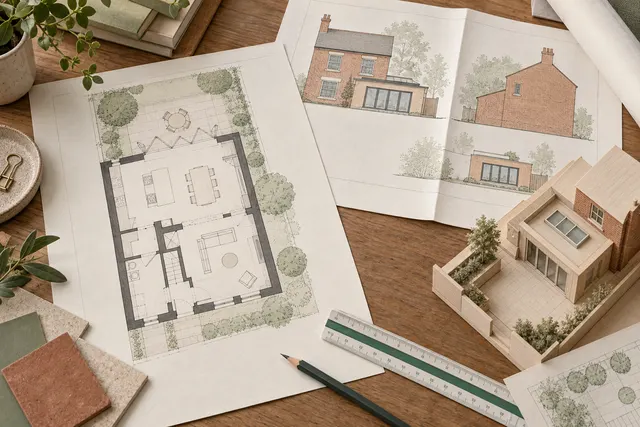
Read planning drawings, floor plans, elevations and sections. Use labelled diagrams, a drawing comparison table and revision checks to understand a proposal.
 PlanningTrack