The development shall begin not later than five years from the date of this decision. Reason: Required to be imposed pursuant to Section 91 (1) of the Town and Country Planning Act 1990 (as amended).
The development shall be carried out in accordance with the following approved plans and documents: • 01 - Existing Floor Plan, Elevations, Location Plan & Block Plan • 02 - Plans and Elevations as proposed • Cover Letter • Green Infrastructure Statement Reason: In order to be clear on the approved scheme of development in the interests of protecting visual amenity and the special qualities of the National Park. Policy: Local Development Plan 2 – Policies 1 (National Park Purposes and Duty), 8 (Special Qualities), 14 (Conservation of the Pembrokeshire Coast National Park) and 29 (Sustainable Design).
Prior to the installation of any external lighting, a lighting scheme and a mitigation strategy, including measures to reduce light spillage onto foraging habitats and roost access points for bats shall be submitted to and approved in writing by the local planning authority. The development shall be carried out in accordance with the approved details. Reason: To ensure that animal and plant species and habitats listed under the Protection of Badgers Act 1992 (as amended) are adequately protected, and to protect and enhance the character and appearance of the site and its setting within the Pembrokeshire Coast National Park. Policy: Local Development Plan 2 – Policies 1 (National Park Purposes and Duty), 8 (Special Qualities), 9 (Light Pollution) 10 (sites and species of European importance), 11 (Nationally protected sites and species) and 14 (Conservation of the Pembrokeshire Coast National Park). Section 6 of PPW edition 12.
The planting and biodiversity enhancement measures shall be implemented in accordance with the Green Infrastructure Statement dated 15 June 2026 and Drawing No. 2270/02 – Plans & Elevations as Proposed, during the first available planting season following commencement of the development. Any existing plants retained; or new plants planted in accordance with the approved scheme which, within a period of 5 years after implementation of the approved development are removed, die, become diseased or damaged to such extent that, in the opinion of the Local Planning Authority, the function in relation to this planning approval is no longer delivered, shall be replaced with plants of similar size and specification. Any variations to the details of the documents and plans must only be undertaken after the proposed variations have been agreed in writing by the LPA. Reason: To prevent detrimental impact to trees, hedges and other landscape features which contribute to the amenity, landscape & biodiversity of the site and surrounding area. Local Development Plan 2 – Policies: 1 (National Park Purposes and Duty), 8 (Special Qualities), 14 (Conservation and enhancement of the Pembrokeshire Coast National Park), 30 (Amenity), SPG 12 – Biodiversity, Technical Advice Note (TAN) 5: Nature Conservation and Planning (2009), Technical Advice Note (TAN) 10: Tree Preservation Orders (1997).
INFORMATIVES: Natural Resources Wales Informatives • The applicant is advised that the grant of planning permission does not remove the requirement to comply with the Water Resources (Control of Agricultural Pollution) (Wales) Regulations 2021 and associated guidance. Responsibility for ensuring compliance with the Regulations rests with the person controlling or managing the agricultural holding. • Natural Resources Wales advises that the installation and subsequent maintenance of the proposed roof should not compromise the structural integrity of the existing silage clamp or associated structures. The relevant requirements relating to the construction, capacity, maintenance and operation of agricultural storage facilities must continue to be met. • The applicant is advised that any new, substantially enlarged or substantially reconstructed silage or slurry storage installation may require notification to Natural Resources Wales at least 14 days before construction begins. The applicant should contact NRW if there is any doubt as to whether the proposed works constitute a substantial change to an existing installation. • The applicant is advised that baled silage must be sealed in an impermeable membrane or bagged and must not be stored, opened or unwrapped within 10 metres of inland or coastal waters where silage effluent could enter. • The applicant is advised that clean water from the proposed roof should remain separated from contaminated agricultural drainage and be directed to the approved clean water drainage system. Separating clean roof water from agricultural drainage can reduce the volume of slurry requiring storage and management. • The applicant is reminded that the planning permission does not authorise any activity which would result in pollution of controlled waters. Any pollution incident or escape of agricultural material should be reported to Natural Resources Wales immediately. • The applicant is advised that Natural Resources Wales's consultation response relates only to matters within its statutory remit. The applicant remains responsible for obtaining any other permits, consents or licences that may be required in connection with the development or the operation of the agricultural holding.
Understand planning application documents, officer reports and decision notices. Use a reading checklist, document table and worked example to inspect a case.
Understand pending consideration, approved, refused and withdrawn planning applications. Compare status labels and find the documents explaining each outcome.
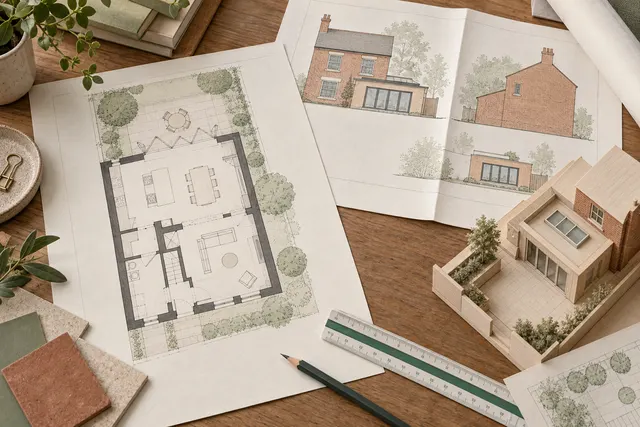
Read planning drawings, floor plans, elevations and sections. Use labelled diagrams, a drawing comparison table and revision checks to understand a proposal.
 PlanningTrack